What does OEE mean? Calculate productivity in manufacturing including Excel template.

Julius Scheuber

Julius Scheuber

|

13.03.2024

13.03.2024

|

Wiki

Wiki

|

6

6

Minutes read

Minutes read

For manufacturing companies, it is important to achieve as much throughput and high product quality as possible with efficient production processes and effective plants. However, many different factors play a role in the complex manufacturing process.

The OEE metric provides an overview of how effectively the machines and plants in production are working. This article explores what the OEE metric means, where it comes from, and how it differs from other manufacturing metrics.

It also discusses how to calculate the OEE value (more on that here) and what special considerations in continuous production should be taken into account.

What Does OEE Mean? Definition and Significance

With the Overall Equipment Effectiveness (OEE) metric, the effectiveness of industrial plants and machines in manufacturing can be measured. It takes into account the availability of the plant, its performance, and the quality of the produced parts. You will learn how the exact calculation is done later.

Efficiency vs. Effectiveness vs. Productivity
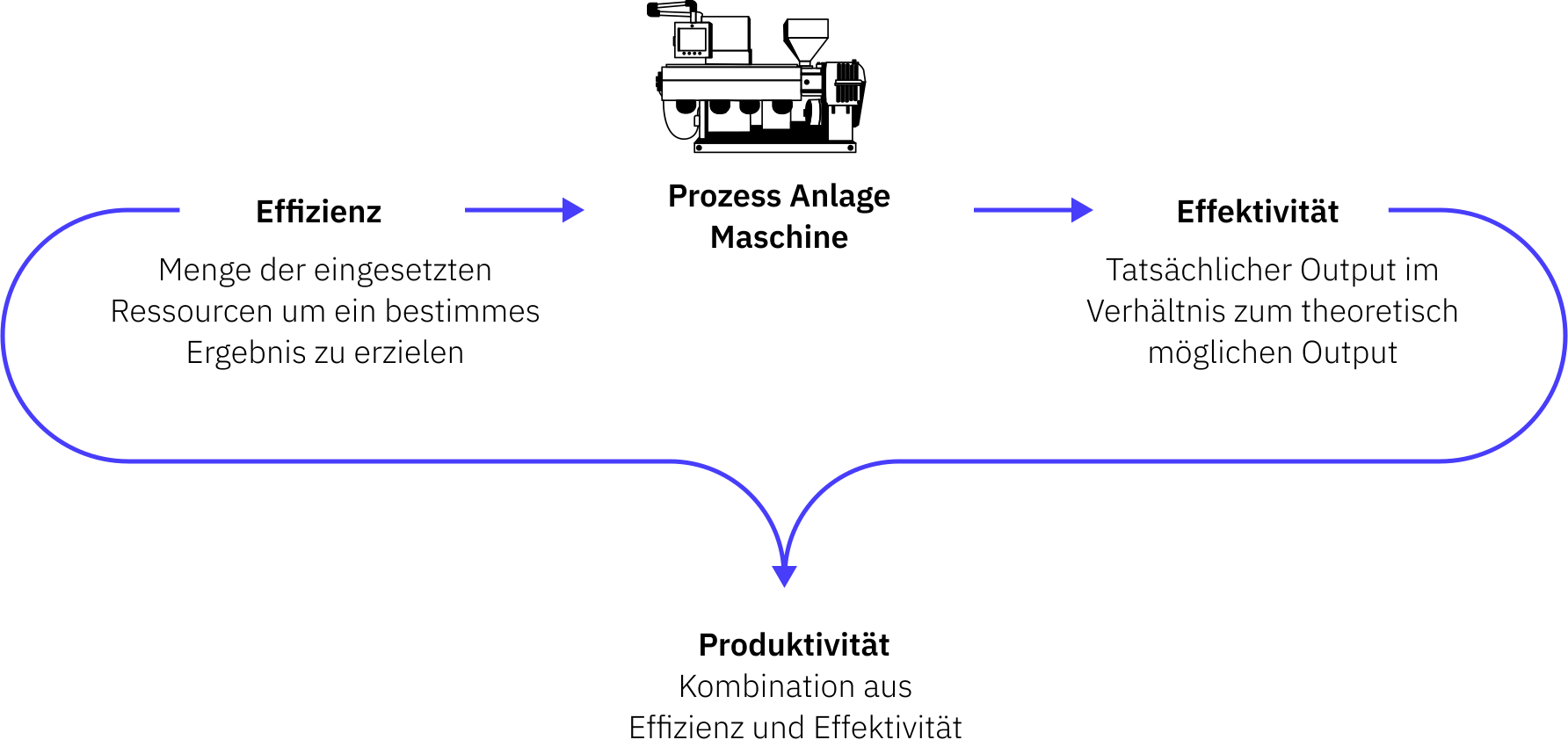


The effectiveness of a plant describes its actual output in relation to the theoretically possible. In contrast, the efficiency of a plant refers to the amount of resources that must be used to achieve a specific result. Together, the effectiveness and efficiency of a plant provide information about its productivity.


The OEE is considered the gold standard for manufacturing companies to evaluate the effectiveness of their shop floor.


To accurately determine the OEE value, the right data foundation is important. The relevant production data can be collected automatically, for example, with the appropriate software. Once the metric is determined, companies can continuously monitor the OEE and thus obtain valuable information about productivity. This, in turn, forms the basis for optimization processes that can further improve overall equipment effectiveness. The goal of optimization based on OEE is to reduce the so-called Six Big Losses, which are the six most significant efficiency losses on the shop floor. Moreover, the OEE also provides a pathway to more sustainability.

Where Does the OEE Metric Come From?

The OEE metric originated in the 1980s. It was developed by the Japanese engineer Seiichi Nakajima for the unit production at the automotive manufacturer Toyota. The concept of OEE and Total Productive Maintenance (TPM) gained significance especially during the 1990s, as Lean Management became increasingly important.

How is the OEE Metric Calculated?

The OEE metric is calculated from the product of the three factors availability (A), which gives information about machine downtime, performance (P) or manufacturing speed, and quality (Q), which refers to the amount of produced scrap. 

You will find out how to determine these three factors in our detailed blog article on the calculation of the OEE metric.

Theoretically, an OEE value of 100 percent would be ideal. This would mean that the plant operates without downtime, at maximum speed, and without scrap. In practice, however, achieving an OEE of 100% is unrealistic, as it is a theoretical maximum.

For manufacturing companies, it is important to achieve as much throughput and high product quality as possible with efficient production processes and effective plants. However, many different factors play a role in the complex manufacturing process.

The OEE metric provides an overview of how effectively the machines and plants in production are working. This article explores what the OEE metric means, where it comes from, and how it differs from other manufacturing metrics.

It also discusses how to calculate the OEE value (more on that here) and what special considerations in continuous production should be taken into account.

What Does OEE Mean? Definition and Significance

With the Overall Equipment Effectiveness (OEE) metric, the effectiveness of industrial plants and machines in manufacturing can be measured. It takes into account the availability of the plant, its performance, and the quality of the produced parts. You will learn how the exact calculation is done later.

Efficiency vs. Effectiveness vs. Productivity


The effectiveness of a plant describes its actual output in relation to the theoretically possible. In contrast, the efficiency of a plant refers to the amount of resources that must be used to achieve a specific result. Together, the effectiveness and efficiency of a plant provide information about its productivity.


The OEE is considered the gold standard for manufacturing companies to evaluate the effectiveness of their shop floor.


To accurately determine the OEE value, the right data foundation is important. The relevant production data can be collected automatically, for example, with the appropriate software. Once the metric is determined, companies can continuously monitor the OEE and thus obtain valuable information about productivity. This, in turn, forms the basis for optimization processes that can further improve overall equipment effectiveness. The goal of optimization based on OEE is to reduce the so-called Six Big Losses, which are the six most significant efficiency losses on the shop floor. Moreover, the OEE also provides a pathway to more sustainability.

Where Does the OEE Metric Come From?

The OEE metric originated in the 1980s. It was developed by the Japanese engineer Seiichi Nakajima for the unit production at the automotive manufacturer Toyota. The concept of OEE and Total Productive Maintenance (TPM) gained significance especially during the 1990s, as Lean Management became increasingly important.

How is the OEE Metric Calculated?

The OEE metric is calculated from the product of the three factors availability (A), which gives information about machine downtime, performance (P) or manufacturing speed, and quality (Q), which refers to the amount of produced scrap. 

You will find out how to determine these three factors in our detailed blog article on the calculation of the OEE metric.

Theoretically, an OEE value of 100 percent would be ideal. This would mean that the plant operates without downtime, at maximum speed, and without scrap. In practice, however, achieving an OEE of 100% is unrealistic, as it is a theoretical maximum.

For manufacturing companies, it is important to achieve as much throughput and high product quality as possible with efficient production processes and effective plants. However, many different factors play a role in the complex manufacturing process.

The OEE metric provides an overview of how effectively the machines and plants in production are working. This article explores what the OEE metric means, where it comes from, and how it differs from other manufacturing metrics.

It also discusses how to calculate the OEE value (more on that here) and what special considerations in continuous production should be taken into account.

What Does OEE Mean? Definition and Significance

With the Overall Equipment Effectiveness (OEE) metric, the effectiveness of industrial plants and machines in manufacturing can be measured. It takes into account the availability of the plant, its performance, and the quality of the produced parts. You will learn how the exact calculation is done later.

Efficiency vs. Effectiveness vs. Productivity


The effectiveness of a plant describes its actual output in relation to the theoretically possible. In contrast, the efficiency of a plant refers to the amount of resources that must be used to achieve a specific result. Together, the effectiveness and efficiency of a plant provide information about its productivity.


The OEE is considered the gold standard for manufacturing companies to evaluate the effectiveness of their shop floor.


To accurately determine the OEE value, the right data foundation is important. The relevant production data can be collected automatically, for example, with the appropriate software. Once the metric is determined, companies can continuously monitor the OEE and thus obtain valuable information about productivity. This, in turn, forms the basis for optimization processes that can further improve overall equipment effectiveness. The goal of optimization based on OEE is to reduce the so-called Six Big Losses, which are the six most significant efficiency losses on the shop floor. Moreover, the OEE also provides a pathway to more sustainability.

Where Does the OEE Metric Come From?

The OEE metric originated in the 1980s. It was developed by the Japanese engineer Seiichi Nakajima for the unit production at the automotive manufacturer Toyota. The concept of OEE and Total Productive Maintenance (TPM) gained significance especially during the 1990s, as Lean Management became increasingly important.

How is the OEE Metric Calculated?

The OEE metric is calculated from the product of the three factors availability (A), which gives information about machine downtime, performance (P) or manufacturing speed, and quality (Q), which refers to the amount of produced scrap. 

You will find out how to determine these three factors in our detailed blog article on the calculation of the OEE metric.

Theoretically, an OEE value of 100 percent would be ideal. This would mean that the plant operates without downtime, at maximum speed, and without scrap. In practice, however, achieving an OEE of 100% is unrealistic, as it is a theoretical maximum.

Get our free OEE calculator now!

With our Excel template, you can quickly calculate the OEE of your production with just a few inputs, thus uncovering the potential of your manufacturing.

Request now for free and without obligation!

OEE Calculation for Piece Production vs. Continuous Processes

For continuous production, there are some particularities in correctly calculating the OEE value

The OEE originates from piece part manufacturing, where the ideal cycle time is used as the performance reference. The ideal cycle time varies individually for each product. When OEE was also introduced in continuous manufacturing, the product reference was broken, and capacities were calculated based on nameplate values. 

In this context, all products of a plant were measured against the same performance reference. However, everyone in manufacturing knows that different products run at different speeds on the same equipment. Therefore, product-specific performance references should be used. 

If customers work with a single performance reference regardless of the product, the captured data does not reflect reality on the shop floor and with the equipment. The actual losses and hence potential optimization measures will not be visible.

You can find more information on this topic here.

OEE vs. Other Key Figures (TEEP, OPE, etc.)

OEE is not the only important metric in manufacturing. Related values include the following: 

  • EU/EUR: The equipment utilization rate describes the time during which a plant actually produces. It is related to the total available time. 

  • TEEP: Total effective equipment performance provides information about the utilization of production capacity and results from the product of EUR and OEE.

  • OPE/OAE: Overall Process/Asset Effectiveness focuses on potential losses in the entire production process.

Productivity and Optimization Potentials

The OEE metric is important for manufacturing companies to better assess their own productivity and identify optimization potentials. However, to correctly calculate the OEE value, the data basis must be accurate. Additionally, companies in continuous manufacturing must pay attention to certain particularities. With the appropriate software, they maintain an overview of the efficiency of their equipment.


Become an OEE Expert with Our OEE Series

Here you will learn how to calculate and improve OEE in the long term.

  1. The Significance of the OEE Metric

  2. How to Calculate OEE (+ Excel Template)

  3. Particularities for OEE Calculation for Continuous Processes

  4. Selecting OEE Software: How to Compare Providers

  5. ROI Calculation for OEE Software

  6. Performance Losses: Why Does the Machine Not Always Operate at Maximum Speed?

  7. How to Make Categories of Machine Downtime Manageable

  8. Optimizing the Shop Floor with the Help of the 6 Big Losses

  9. Manually Recording OEE? Why the Future of Productivity Increase Lies in Automated Data Collection

ENLYZE kennenlernen

Talk to an expert and find out how ENLYZE can help you with your production.

ENLYZE kennenlernen

Talk to an expert and find out how ENLYZE can help you with your production.

ENLYZE kennenlernen

Talk to an expert and find out how ENLYZE can help you with your production.